Get to Know Each Type of Lens Before Choosing the 'Right' Glasses
99 จำนวนผู้เข้าชม |

Many people who have just started having vision problems and want to choose a pair of glasses may wonder How many types of eyeglass lenses are there ? Which type will meet my needs ? And which one will truly solve my vision problems ?
Today, GOOD VISION has compiled information on each type of lens to help you choose the one that is truly 'right' for you.
Lens types can be broadly categorized into two types Lens Structure and Lens Coating. To make it easier to understand, let’s compare a lens to a cake the cake batter is the lens structure, and the toppings are the lens coating.
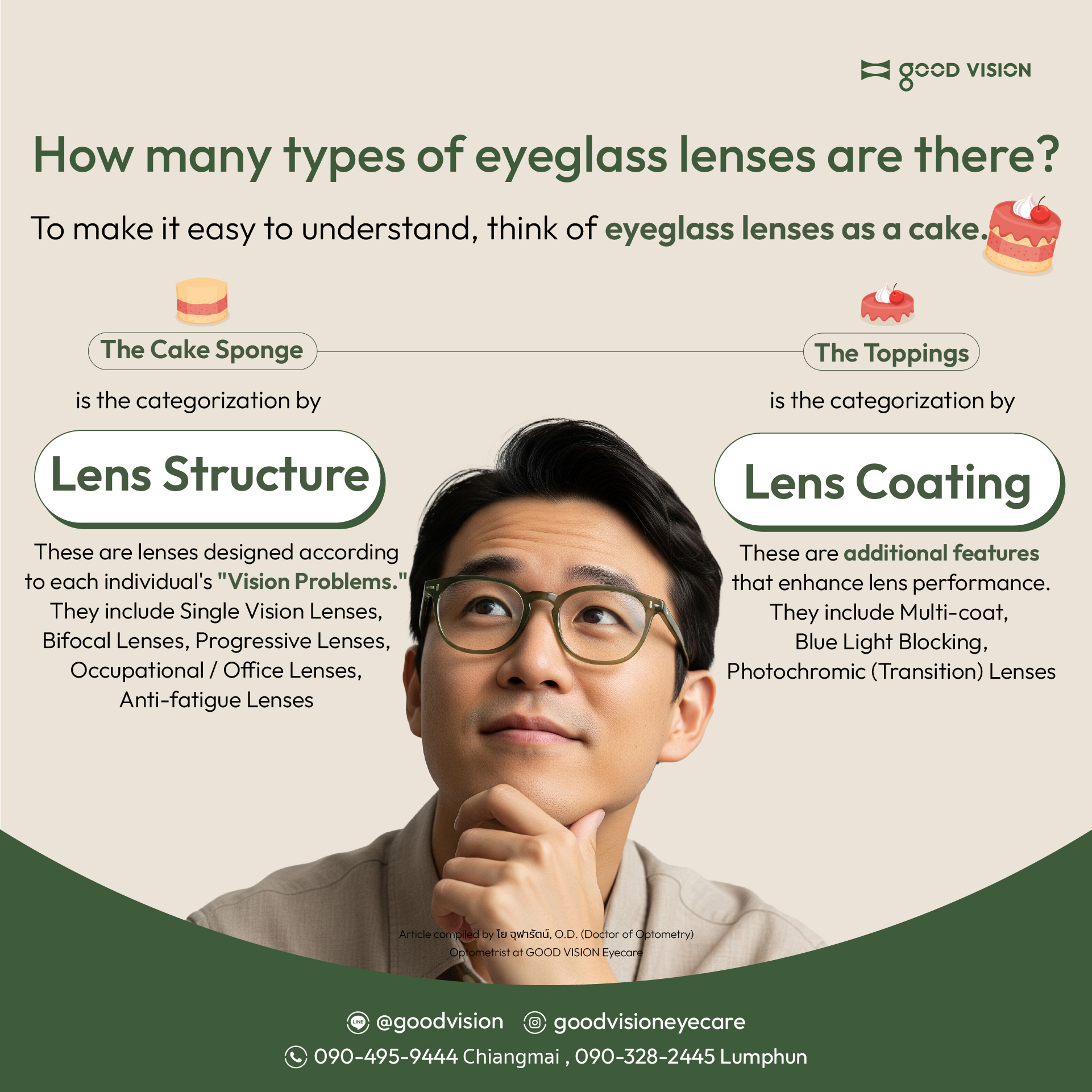
Categorization by Lens Structure
The main types of lens structures are
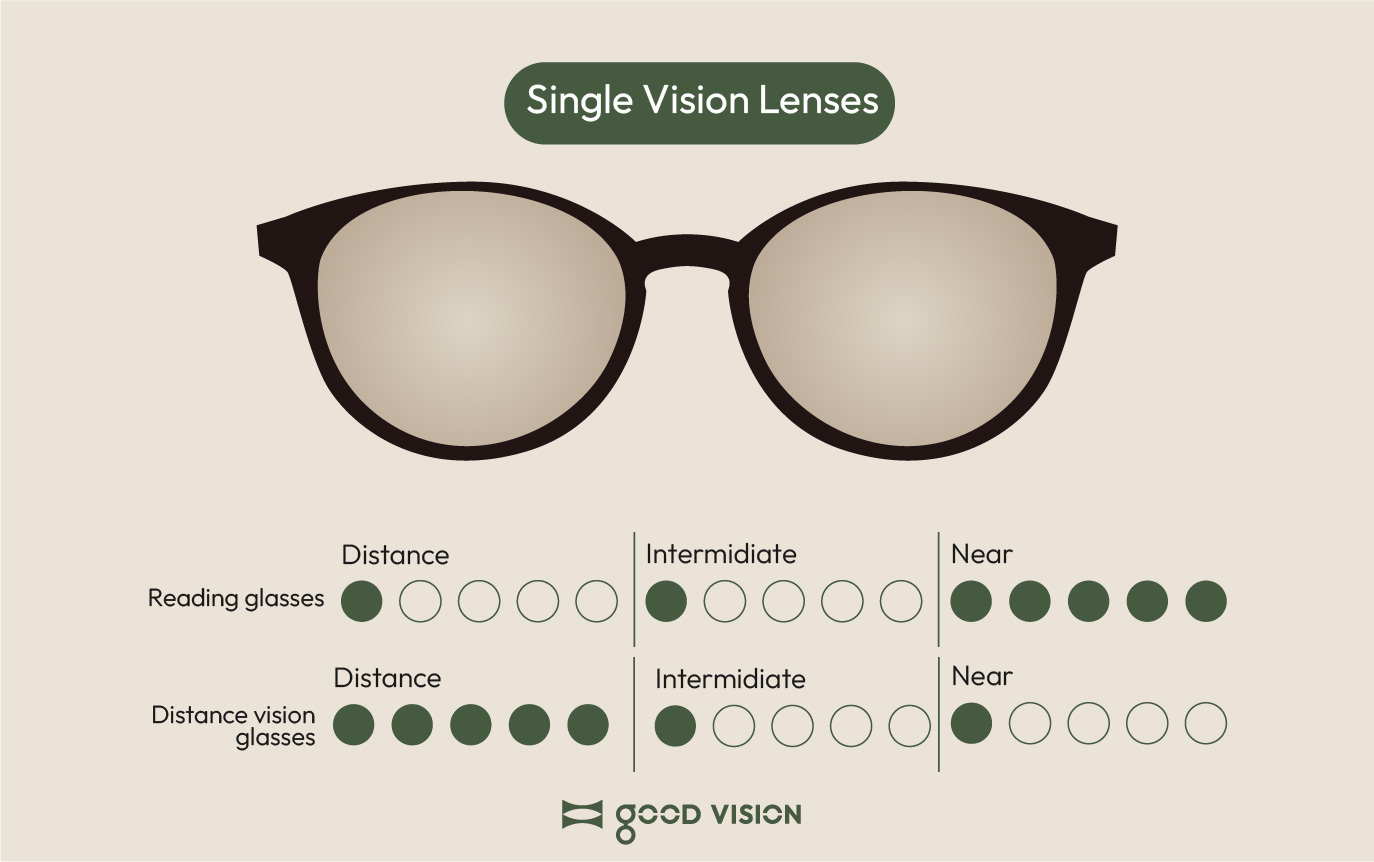
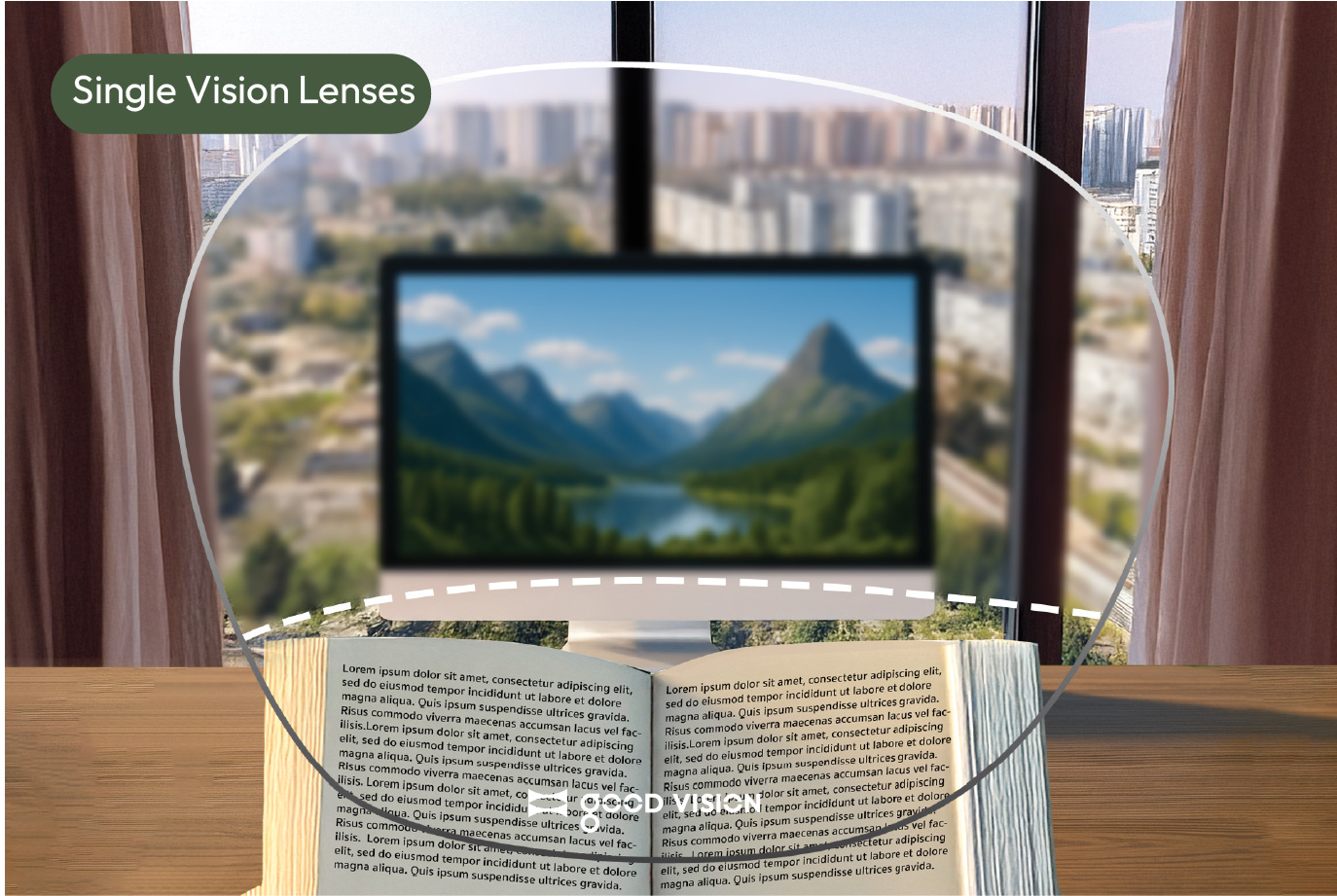
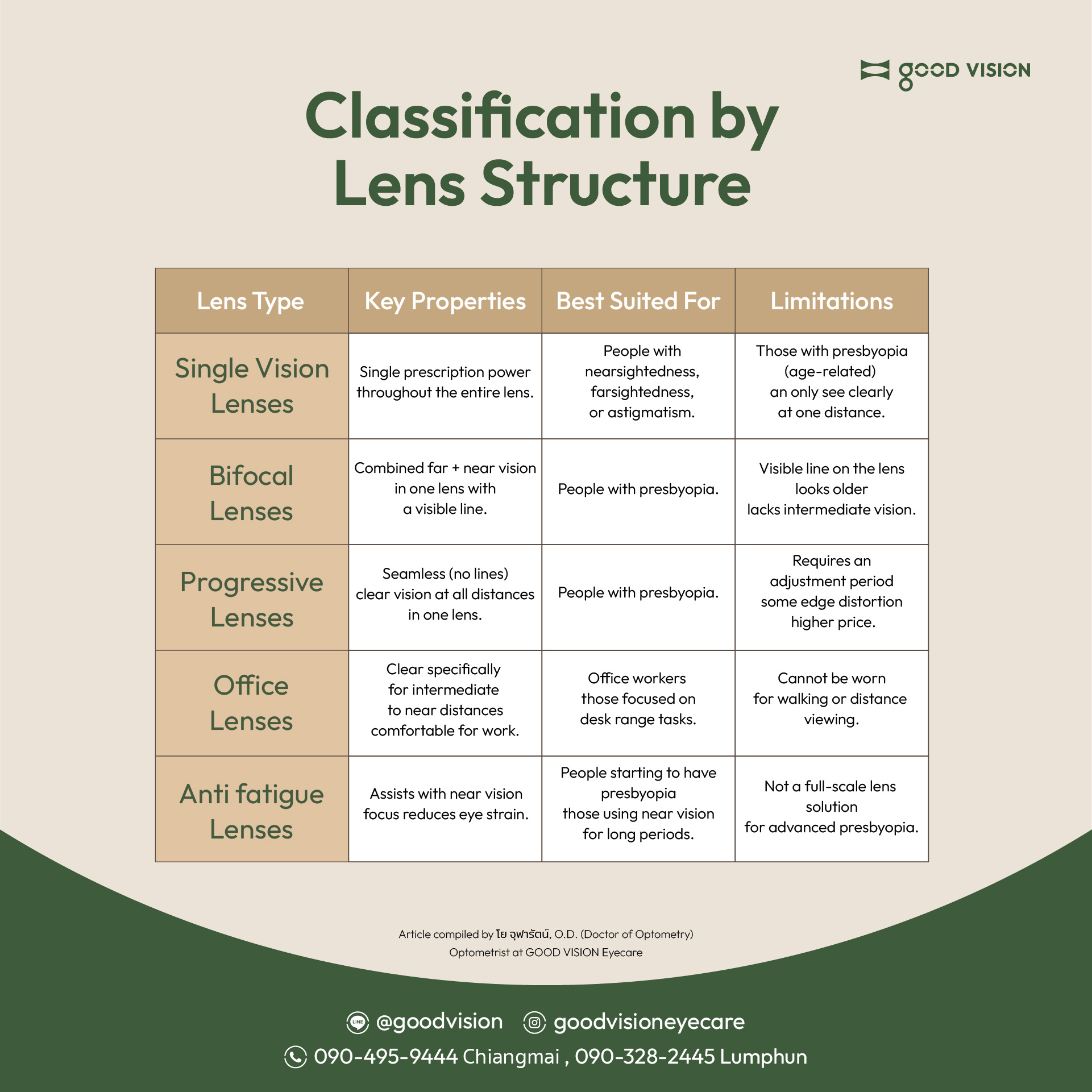
1. Single Vision Lenses These lenses have the same prescription power throughout the entire lens.
- Suitable for : People with nearsightedness (myopia), farsightedness (hyperopia), or astigmatism.
- Note : For those under 40 (without age-related farsightedness or presbyopia), these lenses provide clear vision at all distances. However, for those with presbyopia, single vision lenses will only provide clear focus at one specific distance (either for driving or for reading).

2. Bifocal Lenses These lenses have two different prescriptions in one lens, separated by a visible line.
- Suitable for : People with presbyopia. The upper zone is for distance vision (3 meters or more), and the lower "cup-shaped" zone is for near vision (approx. 40-60 cm).
- Pros : Clear vision for both near and far without needing to remove the glasses.
- Cons : The visible line is less aesthetic and can make the wearer look older. There is also an "image jump" when looking across the line, which can cause discomfort or dizziness. It lacks focus for intermediate distances (60 cm - 3 meters).


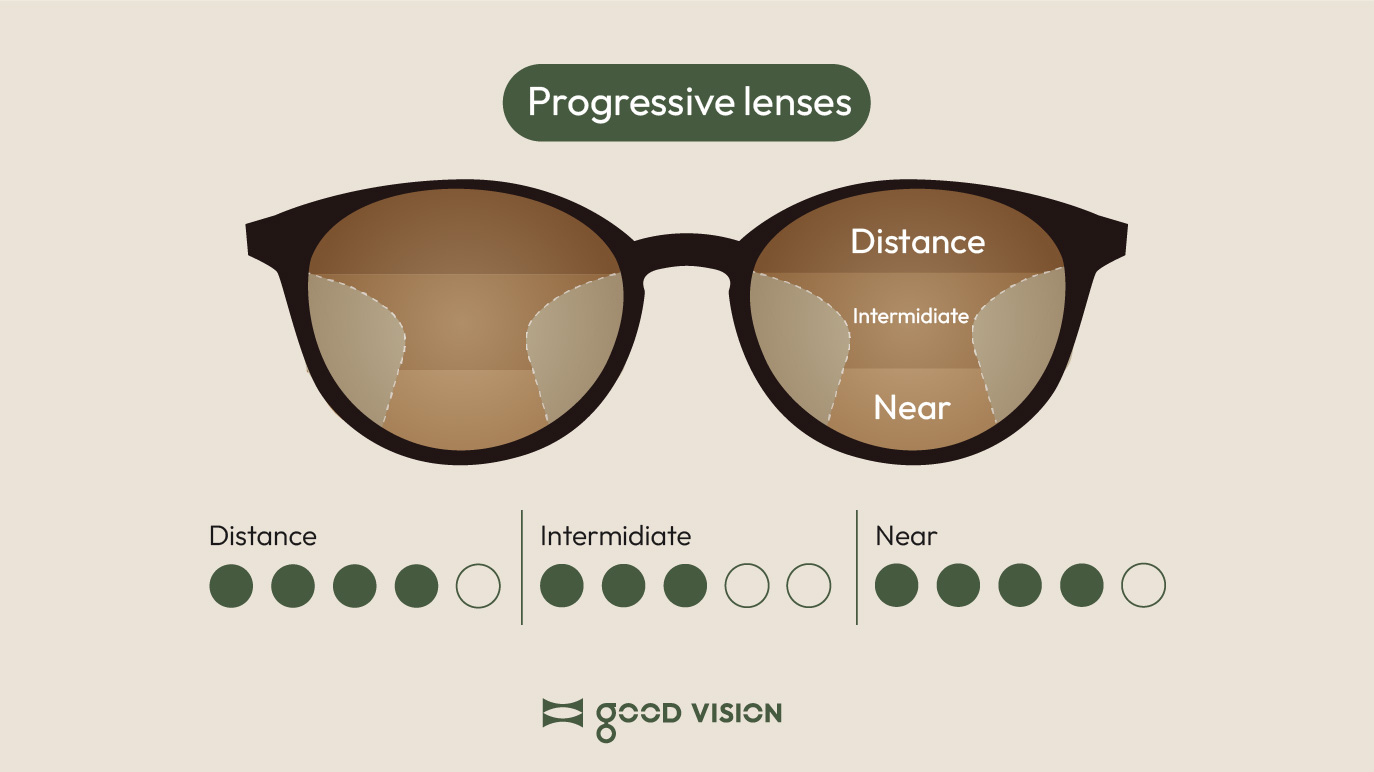
3. Progressive Lenses Seamless lenses that provide clear vision at all distances (near, intermediate, and far) in a single lens.
- Suitable for : People with presbyopia who want a seamless transition.
- Pros : Aesthetic (no lines), clear vision at all distances, no need to switch glasses.
- Cons : Requires an adjustment period to find the right focus zones. There may be some distortion at the edges of the lens, and they are generally more expensive.
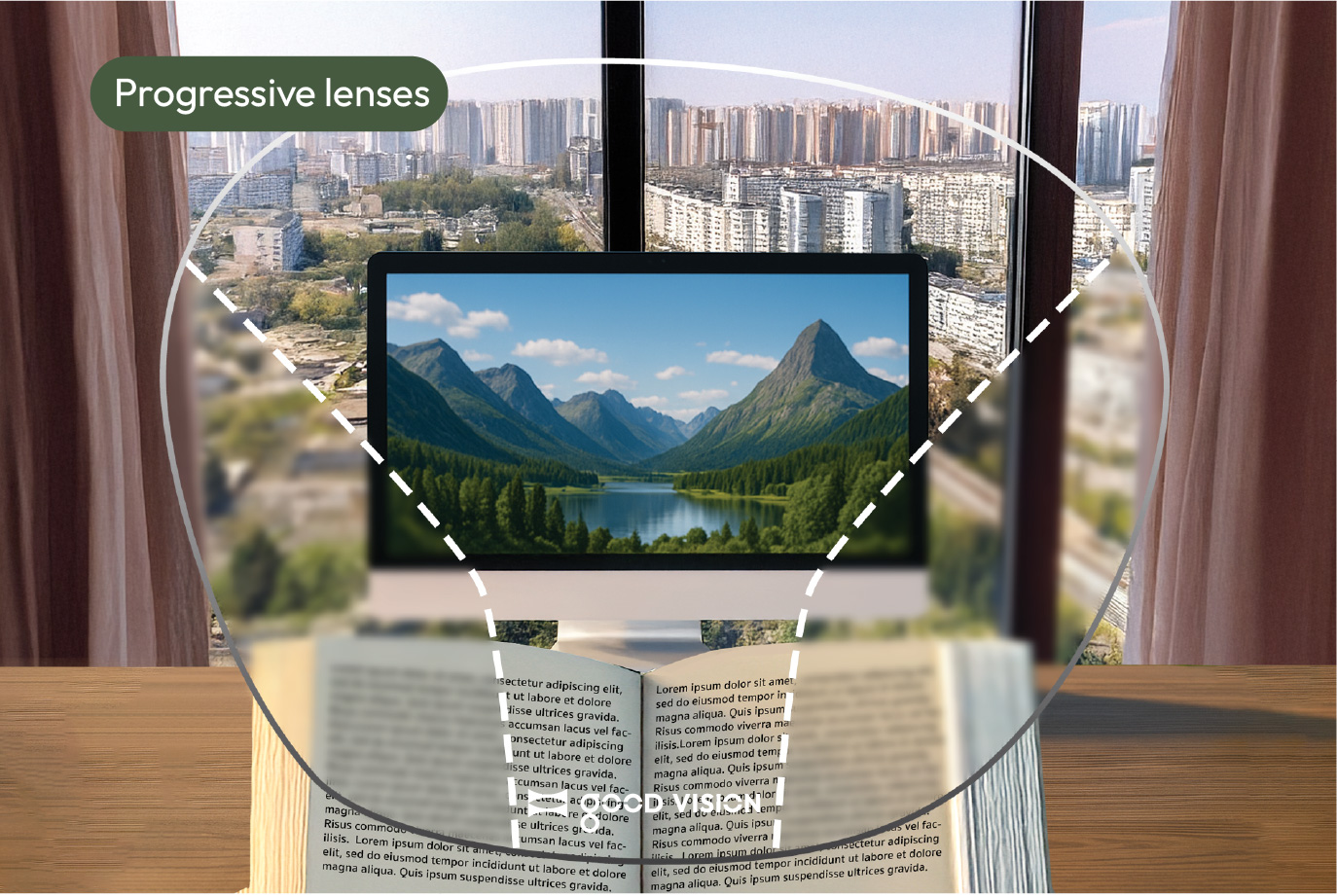
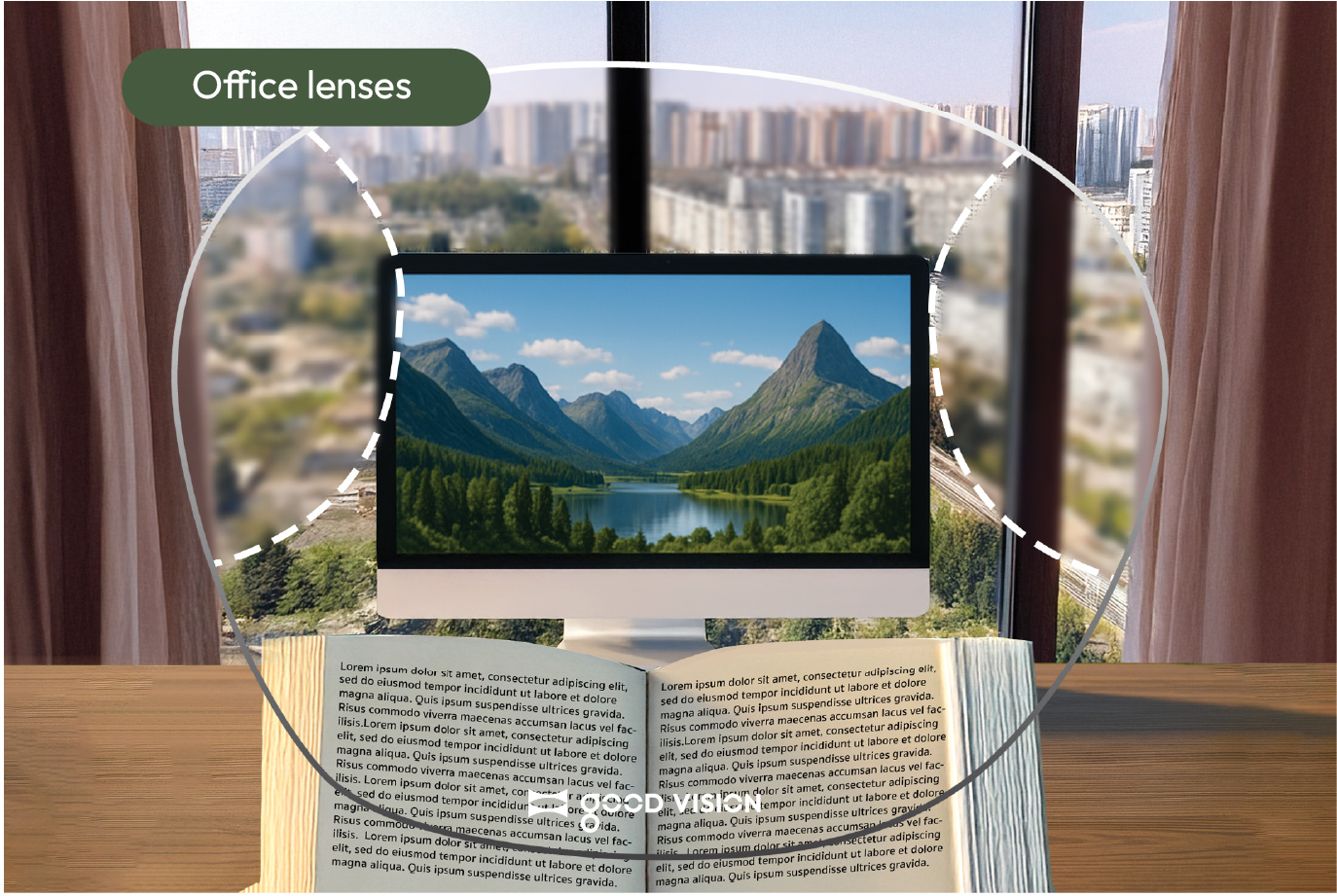
4. Office Lenses (Occupational Lenses) Designed specifically for intermediate and near vision (40 cm - 2 meters).
- Suitable for : Office workers or those who spend most of their time looking at screens and reading.
- Pros : Wider field of view for desk work compared to progressive lenses. Reduces neck pain caused by tilting the head to find the focus on a screen.
- Cons : Clear vision is limited to the desk range; they cannot be worn for walking or distance viewing.

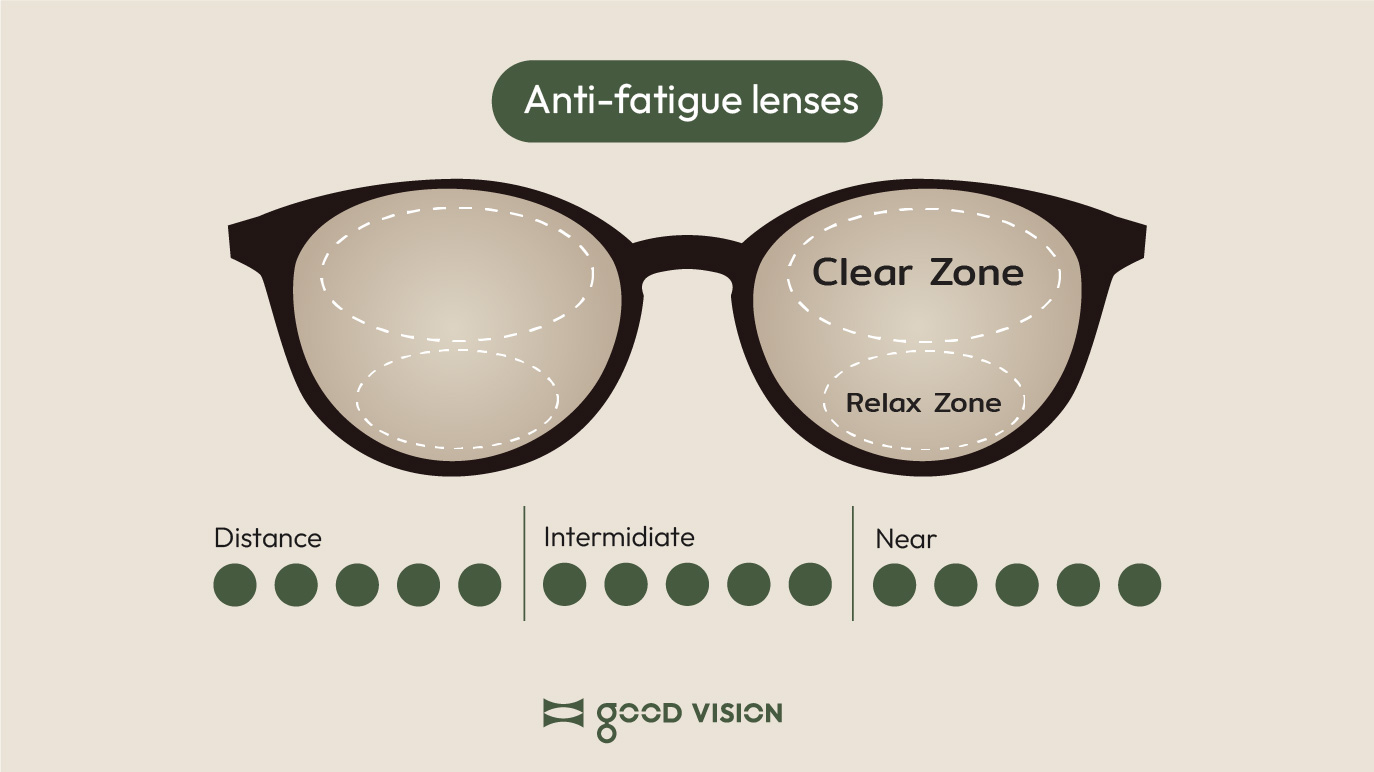
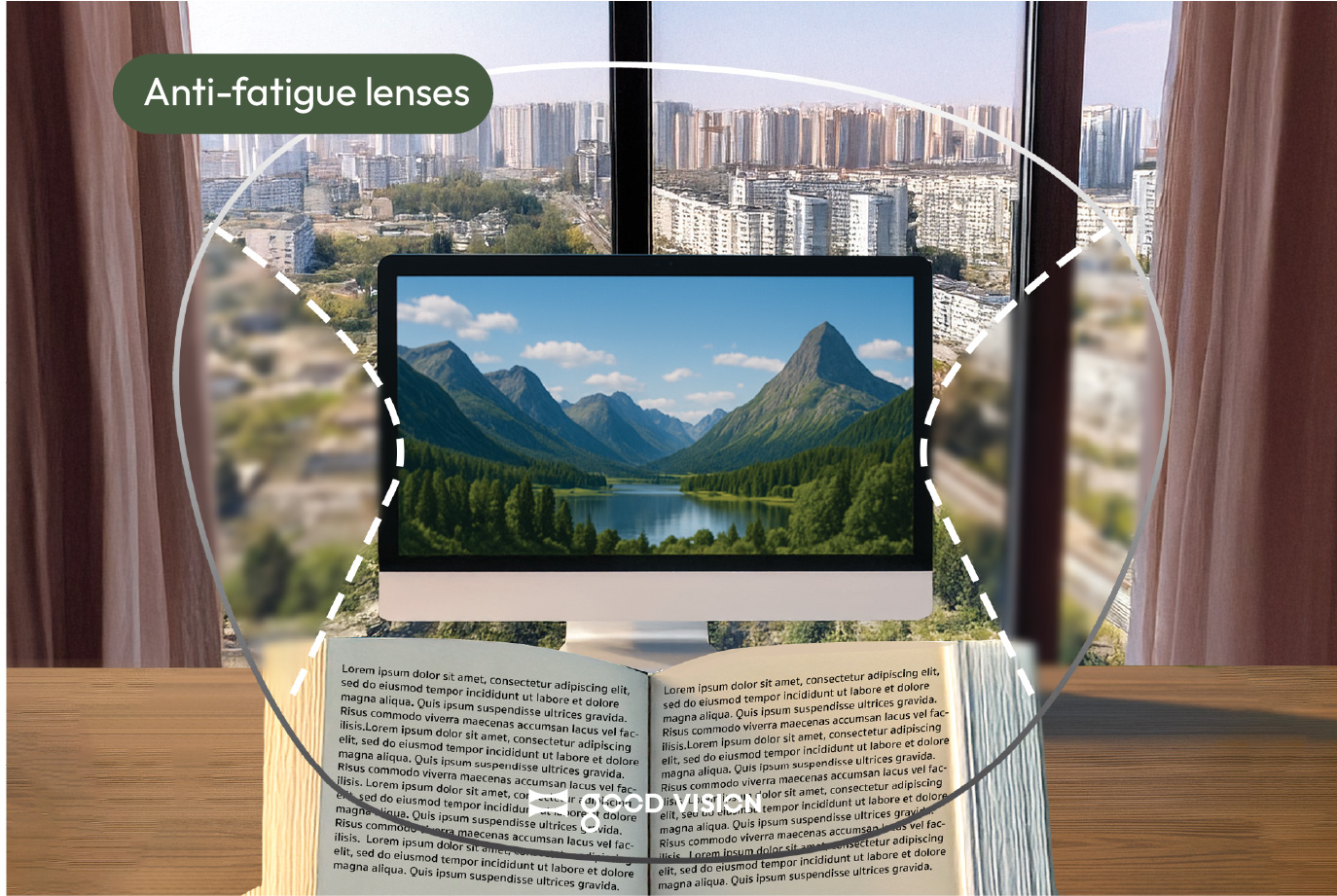
5. Anti-Fatigue Lenses Designed with a boost at the bottom of the lens to assist with near-vision tasks.
- Suitable for : People who experience eye strain from prolonged near-distance work or those in the very early stages of presbyopia.
- Pros : Reduces eye fatigue and muscle strain.
Summary Table of Lens Classification by Structure
Categorization by Lens Coating (Coating)
Most modern lenses come with a basic multi-coating.
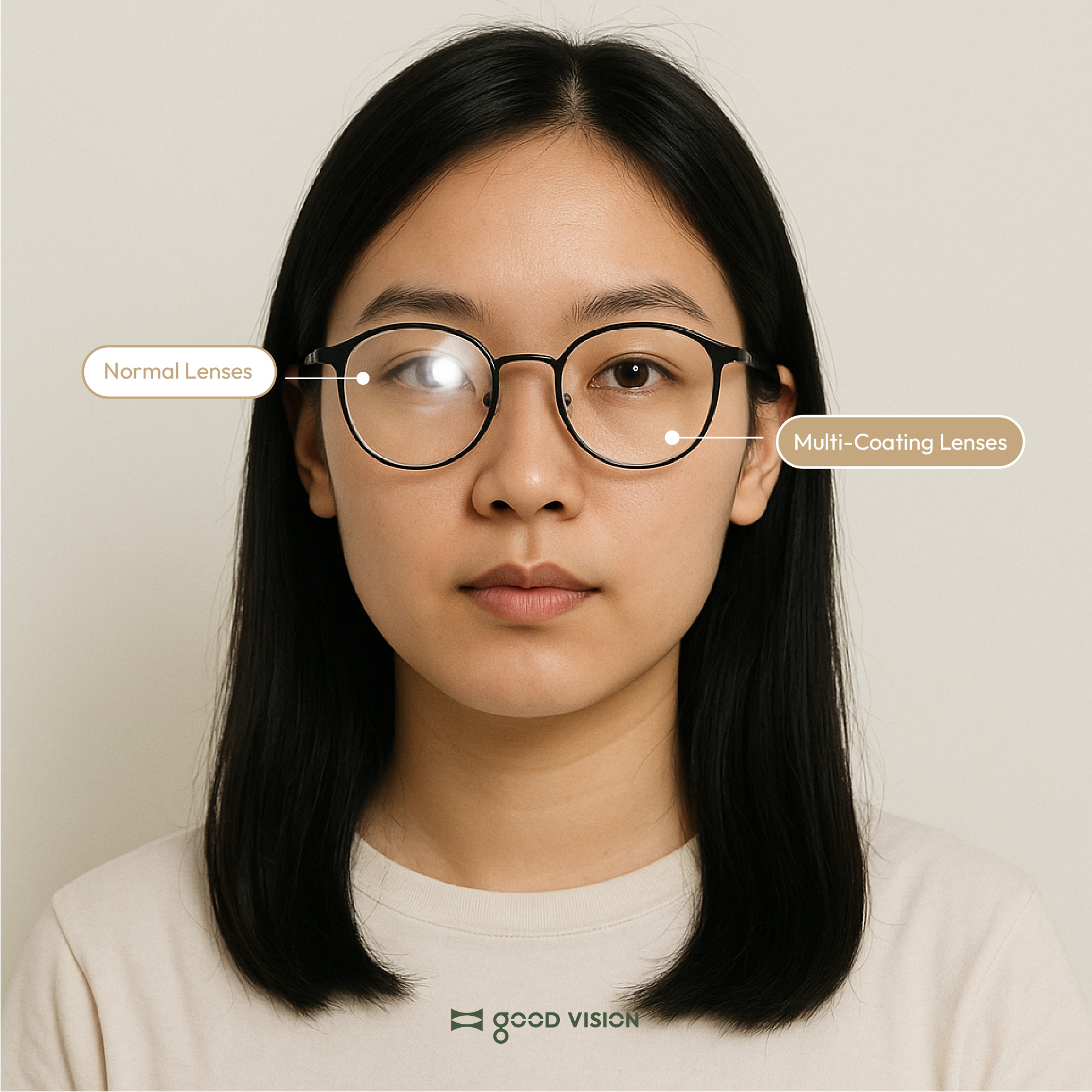
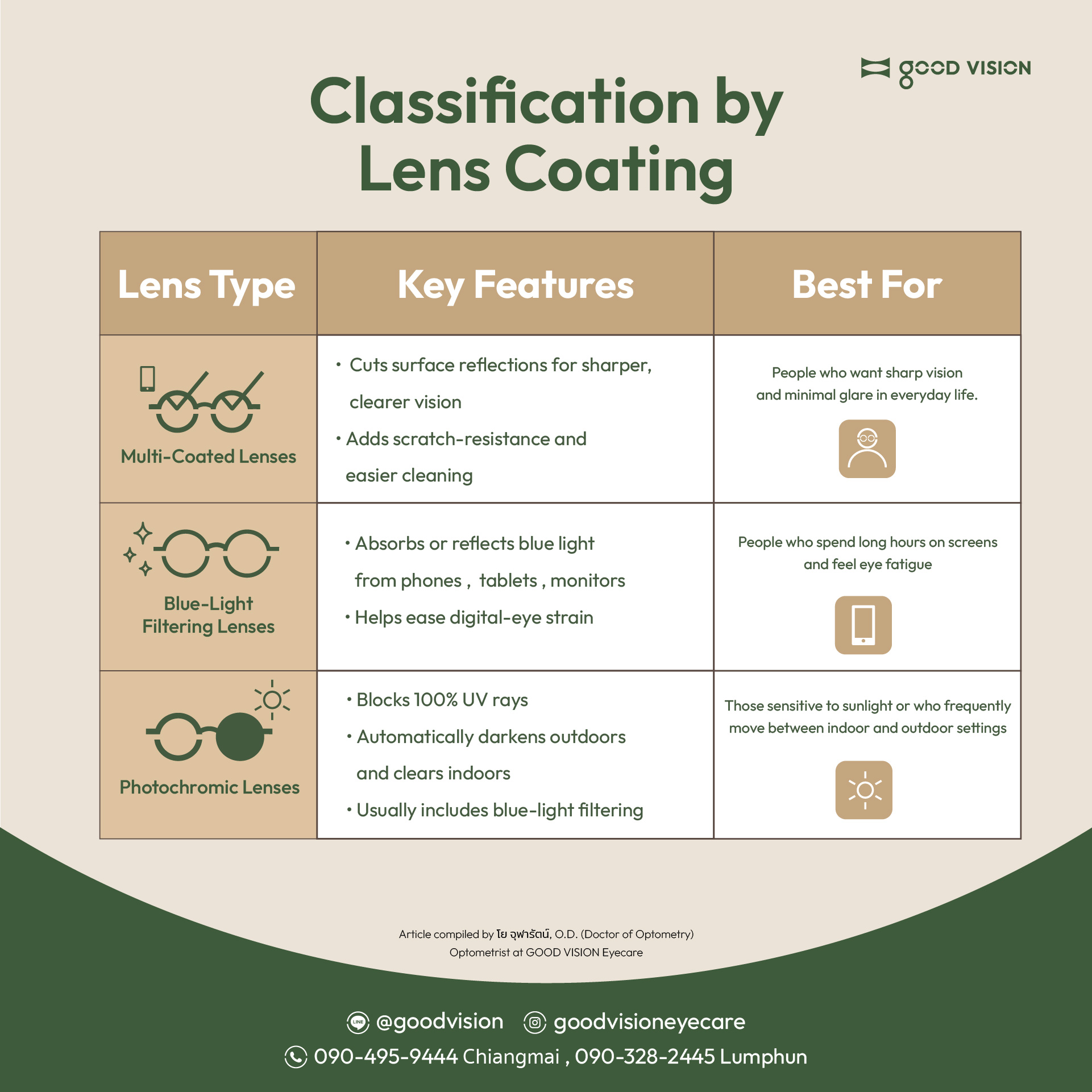
1. Multi-Coated Lenses (Anti-Reflective / Multi-Coating Lenses) Clear lenses coated to reduce reflections on the surface, making images clear and sharp. They protect against scratches, have a smooth surface, and are easy to wipe clean
- Suitable for : General users with vision problems.
2. Blue Light Blocking Lenses (Blue Light Filter Lenses) Lenses that can absorb or reflect blue light from digital screens (tablets, computers, or smartphones). They help reduce eye strain and glare from screens.
- Suitable for : People who use digital screens for long periods.

3. Photochromic Lenses (Auto Lenses / Transition Lenses) Lenses that automatically change color based on light intensity. They are clear indoors but darken when exposed to sunlight or UV rays, acting like sunglasses. They protect against UV rays and reduce light sensitivity.
- Suitable for : People who work both indoors and outdoors or those sensitive to light.

Summary Table of Lens Categorization by Coating
Summary
Eyeglass lenses come in various types to suit different needs. They are categorized by Lens Structure, including Single Vision, Bifocal, Progressive, Office (Occupational), and Anti-fatigue lenses. They are also categorized by Lens Coating, such as Multi-coated, Blue Light Filter, and Photochromic (Transition) lenses. It is essential to choose lenses that match your specific requirements, lifestyle, usage, and vision concerns.
GOOD VISION Eyecare, a Progressive Lens Center, provides eye examination services by Optometrists who are available during all operating hours at both branches. This ensures that every customer receives glasses that truly meet their needs and effectively solve their vision problems.
Article by Yo Chularat, O.D. (Doctor of Optometry)
Optometrist at GOOD VISION Eyecare
Lamphun Branch
Location: Charoen Rat Soi 13 (before the Pratu Pa intersection)
Tel: 090-3282445
Chiang Mai Branch
Location: C-Park Project, on the main road opposite Prince Royal's College
Tel: 092-4959444


