Claude Monet's Cataracts : How Vision Loss Shaped Impressionism | GOOD VISION
Last updated: 10 ม.ค. 2569 | 1229 จำนวนผู้เข้าชม |

Monet and The Canvas of Fading Sight : Impressionism through Clouded Eyes Impressionism through blurred eyes. Monet and paintings in a time when vision was fading
How do cataracts affect color perception?
“Reds looked muddy to me, pinks insipid, and the intermediate or lower notes in the color scale escaped me.” Monet describing the eye symptoms he was facing from cataracts.
Claude Monet the famous French artist who broke traditional conservative painting conventions to create modern art called Impressionism. He focused on conveying the impression of what the artist saw at a specific moment, often capturing the beauty of daily life, nature, or even sunlight.
For an artist like Monet, good and clear vision was critically important for creating his works.
 Impression: Sunrise, 1872
Wild Poppies at Argenteuil, 1873
(source : claude--monet.com)
The Year 1912 Vision Begins to Fade
In 1912, at the age of 72, Monet’s vision began to worsen. He was diagnosed with Cataracts in his right eye. A cataract is a condition where the eye lens becomes cloudy and opaque, preventing light from passing through well. This results in gradually blurred vision, decreased sharpness, and changes in color perception images appear more yellowish and less vibrant than before. Due to the poor surgical technology of that time, Monet repeatedly refused treatment, fearing that a failed surgery might lead to a complete loss of sight, like his fellow artists.
 Water Lilies and Japanese Bridge, 1899
Water Lilies and Japanese Bridge, 1899
(source : claude--monet.com)
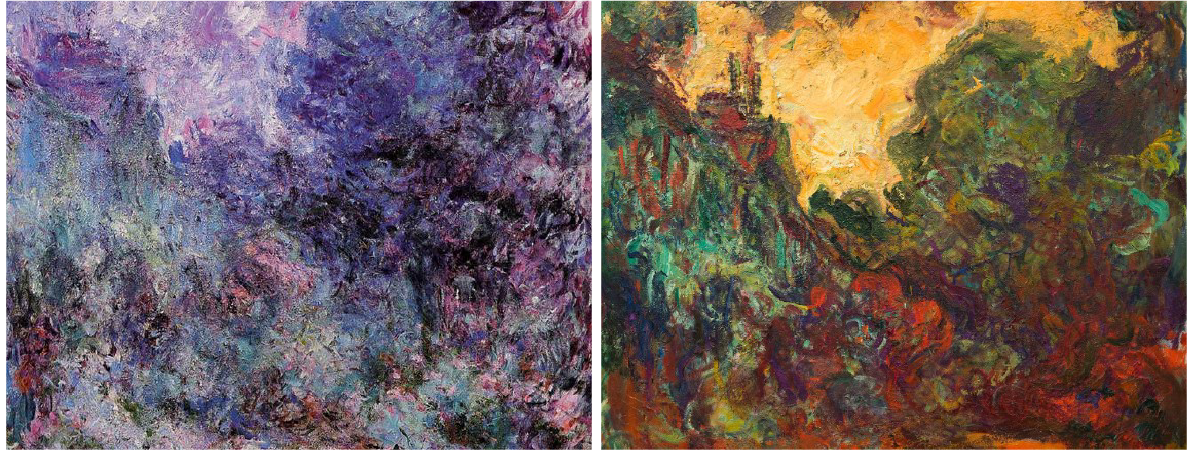
Left Image : Painted when vision was normal ; brushstrokes are small and detailed, colors look like real nature.
Right Image : Painted as cataracts became severe ; color tones are distorted from reality, brushstrokes are hazy, and edges are so blurred that details are almost invisible.
Monet was deeply anxious about his deteriorating vision and wrote "I was greatly terrified when I realized I could see nothing at all with my right eye... One specialist told me I had cataracts and the other eye was starting to show symptoms... Even though I was told it wasn't serious and vision would return to normal after surgery, it was useless because I felt truly shaken and very anxious."
Cataract Treatment in the 19th Century
By 1922, with vision so poor he was considered legally blind, Monet began treatment with ophthalmologist Charles Coutela. Initially, Monet refused surgery, so Coutela treated him by prescribing mydriatics (eye-dilating drops). These drops dilated the pupils, allowing more light in and improving vision. Monet was very satisfied with the results, but once the medicine wore off, his vision returned to its previous state.
Finally, Monet agreed to cataract surgery on his right eye in 1923. The procedure consisted of two parts partial iris removal followed by lens extraction. This was followed by another minor surgery to open the posterior capsule (lens sac).
Recovery was a nightmare for both Monet and the doctor. Monet had to lie flat in bed with sandbags placed by his sides to prevent movement, which he found difficult and tedious. He even wrote a letter to the doctor saying "I deeply regret agreeing to this dangerous surgery. It is worse than I can endure. Forgive my bluntness, but I can tell you that putting me in this condition is almost no different from a crime!"
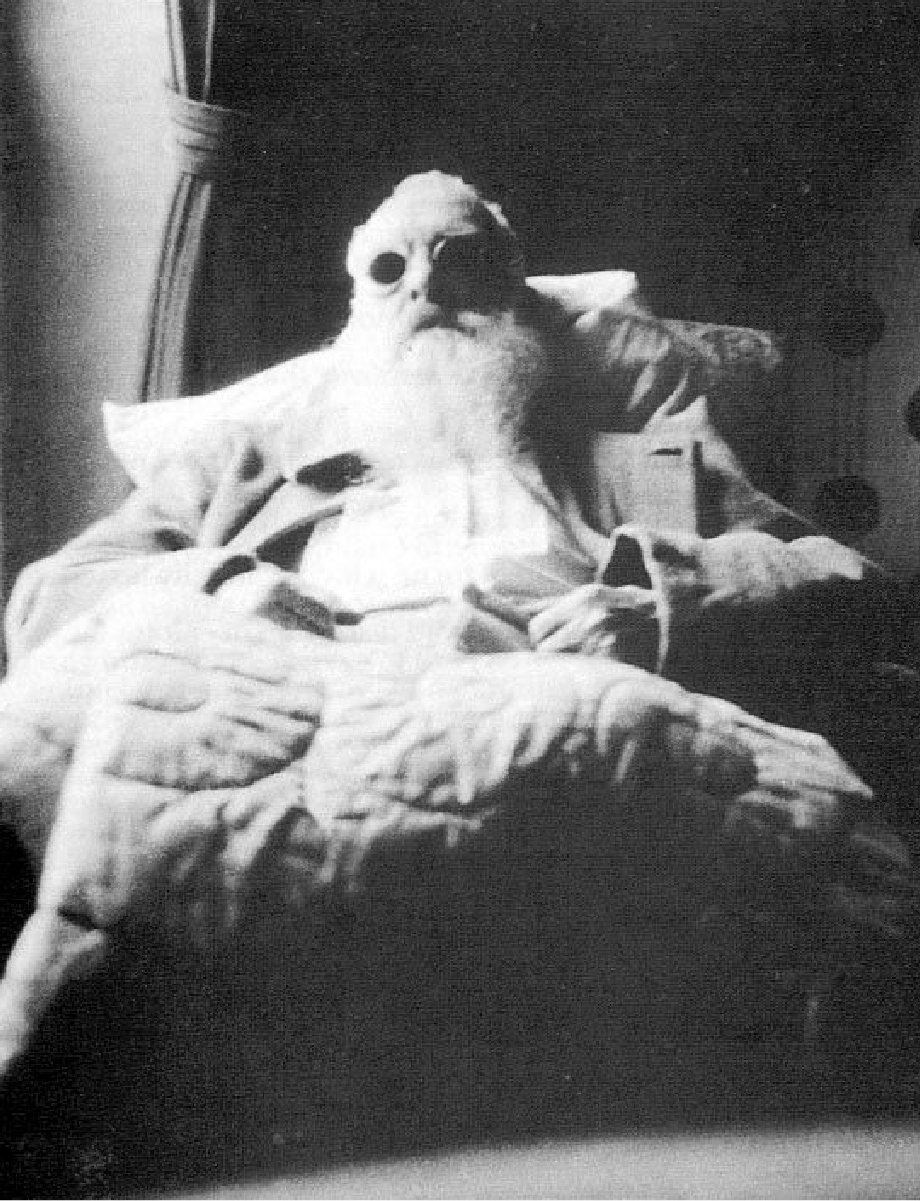 Monet after cataract surgery, 1923. (source ; dailyartmagazine.com)
The Era of Aphakic Spectacles
Since intraocular lens technology did not yet exist, Monet had to wear aphakic spectacles to replace the natural lenses that were removed. This caused symptoms where images appeared curved, distorted from reality, and everything had a blue-green tint (cyanopsia). Consequently, his works during that period were more blue-toned than usual.
Monet's Return to Vision with Special Lenses
After suffering from post-surgery symptoms, Monet met a new ophthalmologist, Jacques Mawas. Mawas prescribed special tinted lenses named Katral from the brand ZEISS. Since Monet still had cyanopsia, Mawas corrected it by patching the left eye. This improved his condition, helping him accept his visual state and return to painting again.
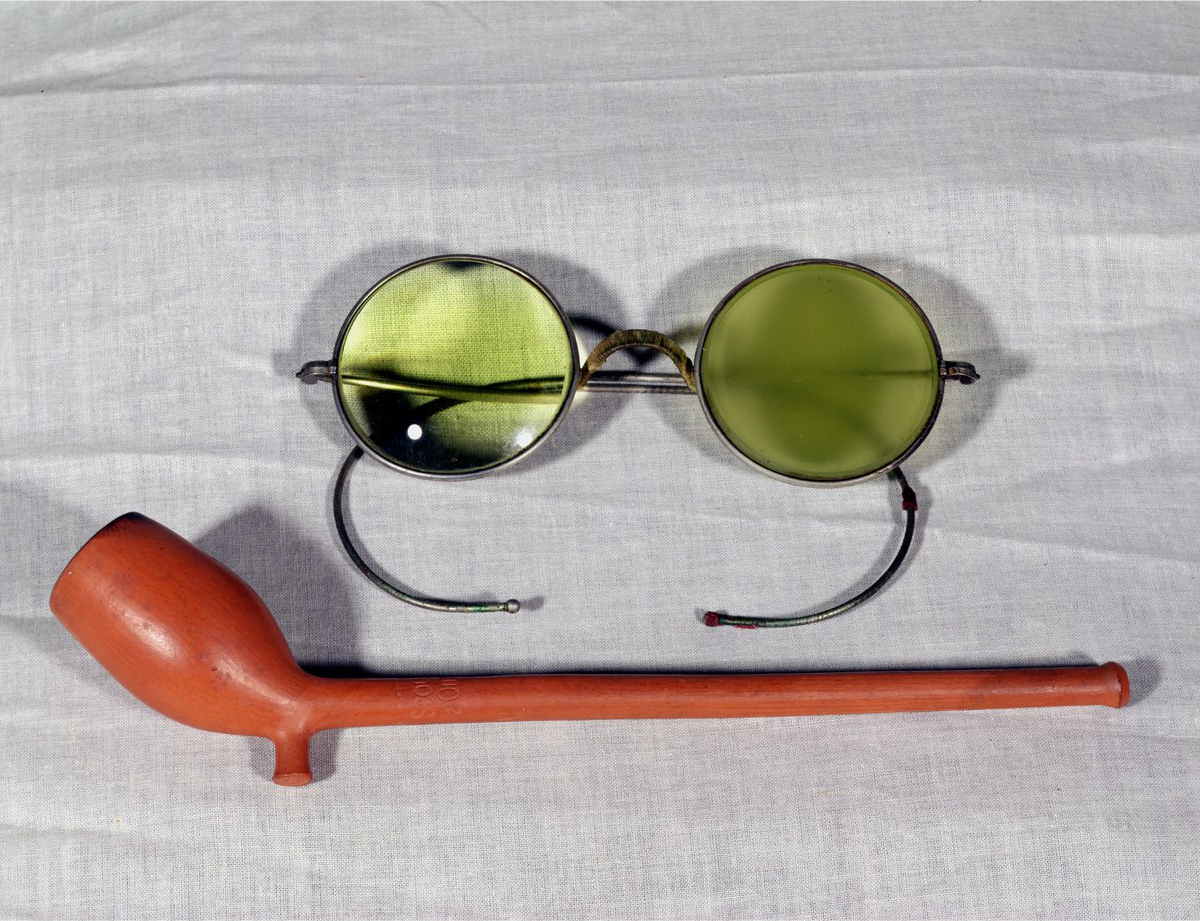
In 1924, Monet's color vision returned to normal. He continued and finished the works he had started, which became the famous Grandes Décorations (Water Lilies panorama series) displayed permanently at the Musée de l'Orangerie in Paris, France.
 Water Lilies 1914-1926
Legacy
In 1926, Monet passed away from lung cancer at the age of 86. Throughout his life, he made immense contributions to the art world by observing nature and never stopping his painting even when he could barely see.
As he said in an interview in 1921 "As long as my paint tubes and brushes are not mixed up... I will paint almost blind, as Beethoven composed completely deaf."
GOOD VISION Eyecare, a Progressive Lens Center, provides eye examination services by Optometrists who are available during all operating hours at both branches. This ensures that every customer receives glasses that truly meet their needs and effectively solve their vision problems.
Article Compiled by Yo Chularat, O.D. (Doctor of Optometry)
Optometrist at GOOD VISION Eyecare
Lamphun Branch
Location: Charoen Rat Soi 13 (before the Pratu Pa intersection)
Tel: 090-3282445
Chiang Mai Branch
Location: C-Park Project, on the main road opposite Prince Royal's College
Tel: 092-4959444
Sources :
Ravin, J. G. (1985). Monet’s Cataracts. JAMA, 254(3), 394.
https://doi.org/10.1001/jama.1985.03360030084028
National Gallery of Victoria. (n.d.). Monet timeline. Copyright (C) 2013 National Gallery of Victoria.
https://www.ngv.vic.gov.au/monet-timeline/#slide-24
Gruener, A. (2015). The effect of cataracts and cataract surgery on Claude Monet. British Journal of General Practice, 65(634), 254–255.
https://doi.org/10.3399/bjgp15x684949
Commerce, B. (2019, September 6). Eight Things You Didn't Know About Claude Monet. M.S. Rau.
https://rauantiques.com/blogs/canvases-carats-and-curiosities/things-you-didnt-know-about-claude-monet
Irvine, J. (n.d.). The Cataracts of Claude Monet. The Ophthalmologist.
https://theophthalmologist.com/issues/2024/articles/jun/the-cataracts-of-claude-monet
Wullschläger, J. (2024, August 29). Later in life, Claude Monet obsessed over water lilies. his paintings of
them were some of his greatest masterpieces. Smithsonian Magazine.
https://www.smithsonianmag.com/arts-culture/claude-monet-became-obsessed-water-lilies-paintings-were-some-greatest-masterpieces-180984898/
ZEISS stories – ZEISS glasses for the artist Claude Monet. (n.d.).
https://www.zeiss.com/corporate/en/c/stories/insights/zeiss-glasses-for-claude-monet.html
เนื้อหาที่เกี่ยวข้อง

Senior Eye Care Guide : 10 Tips | GOOD VISION
17 ม.ค. 2569


